Loading...
First Round of Abstract Submission Ends: Dec 31, 2026
Extended Early Bird Ends: Oct 31, 2026

Keynote Speakers

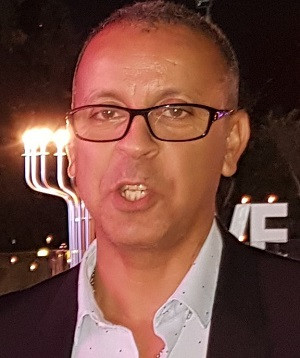
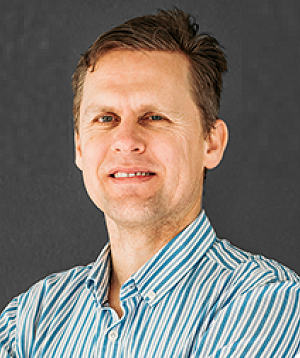
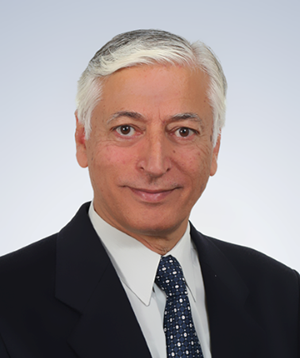
Prof. Mohamed N. Ichchou
École Centrale de Lyon, France
Title: Datadriven design in vibration and acoustics
Mohamed N. Ichchou is Full Professor of Mechanical Engineering at École Centrale de Lyon, France, where he is a member of the Laboratoire de Tribologie et de Dynamique des Systèmes (LTDS, UMR CNRS 5513) and the founder and co-head of the Vibroacoustics and Complex Media research group. He received his engineering degree from École Centrale de Lyon in 1992, his PhD in Mechanical Engineering in 1996, and his Habilitation (HDR) in 2004. His research interests include vibroacoustics, wave propagation in complex media, vibration and noise control, and structural health monitoring, with a growing focus on machine learning applications in structural dynamics. He has authored several hundred papers in international peer-reviewed journals, serves on the editorial boards of several international journals, and has coordinated numerous European projects, including the H2020 ITN-EJD programme VIPER, as well as more than 50 industrial contracts in the transport and energy sectors. He has also served as coordinator of research in China for the Group of Écoles
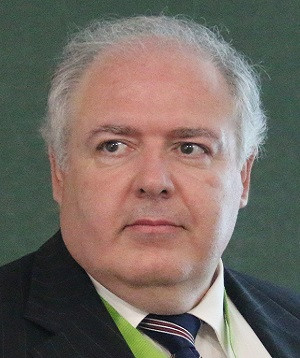
Prof. Francisco J. G. Silva
Polytechnic of Porto, Portugal
Title: To be confimed
Will Update Soon
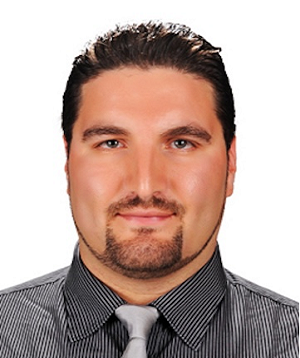
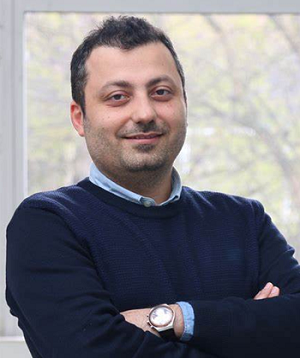
Prof. Barbaros Çetin
Bilkent University, Turkey
Title: Boundary Element Method for Microfluidic Applications
Dr. Barbaros Çetin received his B.S. (2002) and M.S. (2005) in Mechanical Engineering at Middle East Technical University, Ankara, Turkey. He received his PhD (2009) in the Department of Mechanical Engineering at Vanderbilt University, where he focused on electrokinetic transport and particle manipulation in lab-on-a-chip devices for biomedical applications. Following his PhD, he became a faculty member at Middle East Technical University-Northern Cyprus Campus Mechanical Engineering Program. In 2011, he became a faculty member in the Mechanical Engineering Department at I.D. Bilkent University, Ankara, Turkey. His current research interests include particle manipulation for microfluidic applications, modeling of particle motion using the boundary element method, and modeling, fabrication, and experimentation of flat-grooved heat pipes. Dr. Çetin is the recipient of the 2015 Bilkent University Distinguished Teacher Award, 2017 Outstanding Young Scientist Award of the Turkish Academy of Sciences (TÜBA-GEBİP), 2017 METU Prof. Dr. Mustafa N. Parlar Research Incentive Award and 2018 Science Academy Association Distinguished Young Scientist Award (BAGEP).
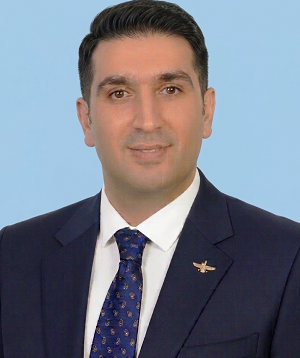
Prof. Mostafa Ghasemi
University of Electronic Science and Technology of China (UESTC)
Title: To be confirmed
Prof. Mostafa Ghasemi is a distinguished Professor of Chemical Engineering, recognized for his contributions to advanced membrane technologies, sustainable energy systems, and water treatment processes. He earned his PhD in 2012 and has held academic and research positions at several international institutions, including UKM, UTP, and Sohar University, before progressing to a senior research role in China. He was awarded the Young Lecturer Award at UKM in 2013 in recognition of his excellence in teaching and research, and also received an Achievement Award from the King Abdulaziz City for Science and Technology (KACST) for his notable scientific contributions.
Currently, Prof. Mostafa is affiliated with the Yangtze River Delta Research Institute, University of Electronic Science and Technology of China (UESTC), where his research focuses on microbial fuel cells, forward osmosis, and membrane-based separation technologies. His work integrates experimental methodologies with artificial intelligence and optimization techniques to enhance system efficiency and sustainability.
He has published more than 100 ISI-indexed manuscripts and achieved an H-index of 47, reflecting his strong impact and influence in the field of chemical engineering and membrane science. He has also been honored as a Zhejiang Talent in recognition of his scientific achievements and continues to advance innovative solutions addressing global challenges in energy, environment, and resource management.
Prof. Arnaud Malan
University of Cape Town, South Africa
Title: Advances in High Fidelity Modelling of Liquid Hydrogen Storage and Distribution
Dr. Arnaud Malan holds the South African Research Chair (SARChI) in Industrial Computational Fluid Dynamics (CFD) at the University of Cape (UCT). He has published 84 peer reviewed articles primarily focused on multi-phase liquid-gas modelling. Malan’s work has been at the intersection between computational mathematics research and industrial application. As such the work has been in support of leading industries such as Airbus and the Ariane Group. An outcome of this work has been the state-of-the-art cryogenic CFD software AlphaFlow and the UCT start-up Elemental Numericsc(Pty) Ltd. Malan serves as Founing Managing Director of Elemental Numericsm, which works in partnership with Malan’s research group at UCT to form a dedicated initiative. This initiative consists of 20 full time staff which support active partnerships with over 15 universities and research institutes internationally. Their work has received wide international acclaim, which includes a new world record for Class A Water Rocketry in 2015; the Silver Medal from the Royal Aeronautical Society for a “Major Contribution to Aerospace” and the Airbus award for ‘Best Innovation in Flight Physics’.
Dr. Mostafa Safdari Shadloo
INSA Rouen, France
Title: Electric-Field-Driven Flow Control of Transport Phenomena
Dr. Shadloo is a leading researcher in fluid mechanics and CFD, serving as Deputy Director of CORIA/CNRS and Full Professor at INSA Rouen, France. An Institut Universitaire de France Laureate, his work focuses on turbulence, electrohydrodynamics, and AI in fluid dynamics. With over 9,000 citations (h-index 57), he ranks among the top mechanical and aerospace scientists in France and worldwide.
He earned his PhD from Sabanci University and habilitation from the University of Rouen. His research spans fundamental and applied fluid dynamics, including a patented electrohydrodynamic separation system. He has led international projects exceeding €3M and collaborated with institutions such as Stanford and Imperial College London.
He has supervised over 60 trainees, including 12 PhDs, and teaches CFD, heat transfer, and turbulence globally. Recognitions include the Humboldt Fellowship and Stanford’s top 2% scientists list. He has published over 120 ISI-indexed papers in journals like Journal of Fluid Mechanics and Physics of Fluids, bridging theory with industrial applications in energy and sustainability.
For more details, visit his Google Scholar profile or personal website.
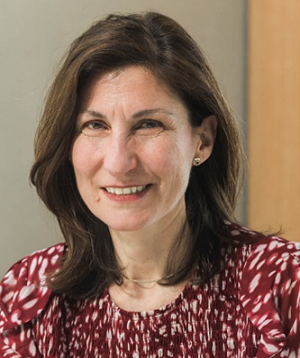
Prof. Angeli Panagiota
University College London, UK
Title: CFD modelling to support intensified two-phase flow processing
Prof Panagiota Angeli, FREng, FIChemE, is a Professor in the Department of Chemical Engineering at UCL, and leads the ThAMeS Multiphase group. She obtained a Diploma in Chemical Engineering from the National Technical University of Athens and a PhD on Multiphase Flows at Imperial College London. She specializes on complex multiphase flows particularly those involving two liquid phases and their application in sustainable and intensified processing. Her research aims to link small scale interactions and interfacial phenomena to the macroscopic behaviour of the complex flows and to the development of predictive models. She has been investigating the effects of surfactants, particles and non-Newtonian rheologies on two-phase flows, as well as their application to the intensification of metal separations, and to the manufacturing of complex formulations. The experimental investigations have been enabled by original and advanced sensing and measurement techniques, such as micro- and high speed Particle Image Velocimetry (PIV) and ultrasound. Prof Angeli’s work has been supported by substantial UK Research Council and European Union funding and by industry. She has been awarded a RAEng/Leverhulme Trust Fellowship and has participated and chaired UK EPSRC and international (Norway, Sweden, Ireland, Belgium, Germany) research funding review panels. She has an H index=49 and published over 220 papers.
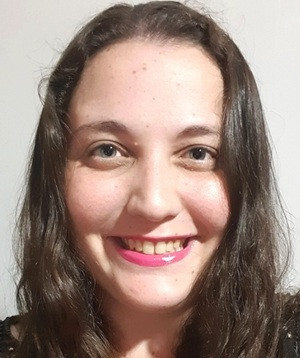
Dr. Naiara P. V. Sebbe
CIDEM, ISEP, Polytechnic of Porto, Portugal
Title: Advancements in Cutting Tool Coatings for Difficult-to-Machine Materials: Challenges and Future Perspectives
Naiara P. V. Sebbe is a distinguished researcher and expert in materials science and mechanical engineering, currently at the forefront of advanced manufacturing technologies. Combining a solid foundation in Materials Engineering with a Master’s degree in Mechanical Engineering and an MBA in Project Management, she possesses a unique, multidimensional perspective that bridges the gap between deep-tech research and large-scale industrial implementation.

Her research is dedicated to pushing the boundaries of material-tool interactions, with a specific focus on the development and optimization of advanced cutting tool coating for the most demanding industrial applications. Naiara has established herself as a leading voice in the study of "difficult-to-machine" materials, particularly the complex mechanics of dissimilar materials and advanced composite stacks such as CFRP/Ti/Al. Naiara is a seasoned speaker and contributor at prestigious international forums. Her work is characterized by the integration of rigorous material science theory with the strategic demands of the manufacturing industry. Her expertise in project management has been instrumental in her success in retrofitting and optimizing high-speed machining systems, where she consistently demonstrates an ability to translate complex technical challenges into sustainable, efficiency-driven industrial solutions.

Naiara P. V. Sebbe remains committed to advancing the future of materials engineering, focusing on sustainable manufacturing strategies and the next generation of coating technologies that define global industrial progress.
Prof. Binnur SAGBAS
Yıldız Technical University, Türkiye
Title: Engineering High-Performance Metal Matrix Composites through Laser Powder Bed Fusion Additive Manufacturing
Prof. Dr. Binnur Sagbas is a Mechanical Engineer whose research interests include additive manufacturing, sustainable additive manufacturing, biomaterials, surface post-processing, coatings, tribology, biotribology, and manufacturing metrology. She is the Head of the Advanced Manufacturing Technologies Laboratory and the Coordinator of the YTU Additive Manufacturing Research Group. She has led and participated in more than 25 scientific research projects and has authored more than 50 journal articles, edited 2 books, contributed 8 book chapters, and published over 60 conference papers in the fields of additive manufacturing, surface modification, tribology, and manufacturing metrology. Prof. Sagbas serves on the Editorial Boards of the International Journal of 3D Printing Technologies and Digital Industry and Advanced Manufacturing Research. She also served as Chair of the 7th International Congress on 3D Printing (Additive Manufacturing) Technologies and Digital Industry in 2023.

She is currently the Chair of the 5th International Conference on 3D Printing and Additive Manufacturing, to be held on 17–19 September 2026 in Istanbul, Türkiye. She also serves as Vice Dean of the Faculty of Mechanical Engineering at Yildiz Technical University, Istanbul, Türkiye.
Prof. Marcelo Souza Castro
University of Campinas, Brazil
Title: Gas–Liquid Multiphase Flow of Non-Newtonian Liquids in Pipelines: Applications in the Oil and Gas Industry
Associate Professor and researcher at the School of Mechanical Engineering and the Center for Energy and Petroleum Studies - CEPETRO, both at UNICAMP, University of Campinas, Brazil. Leader of ALFA (Artificial Lift and Flow Assurance Research Group). Holds a bachelor degree in Mechatronics Engineering and a Ph.D. in Mechanical Engineering (University of São Paulo – USP). Performs research on Fluid Mechanics, Thermodynamics and Heat Transfer applied to Multiphase Flows. Coordinator of several research projects with Energy Companies (Petrobras, TotalEnergies, Equinor, Petronas, Repsol-Sinopec and PRIO) in the fields of Flow Assurance, Artificial Lift, Integrated modeling of Reservoir and Production Systems, pursuing CO2 footprint reduction of oil and gas production
Prof. Satnam Singh
The NorthCap University, India
Title: Developments in the Metallic Materials Processing through Microwave Heating Route
Dr. Satnam Singh (Mechanical Engineer) is presently working as Associate Professor in the Department of Multidisciplinary Engineering at The NorthCap University, Gurugram. Dr. Singh has completed his Ph.D. from Thapar Institute of Engineering and Technology in Advanced Manufacturing Technology and Sustainable Processing of Materials. He is expert in the area of “Microwave processing of metal-ceramic composite castings”. Dr. Singh has more than 15 years of Academic and Industrial experience.

Dr. Singh’s fields of research include sustainable materials processing, microwave materials processing, development of composites/nano composites (MMC’s, PMC’s and CMC’s), casting, and welding. Dr. Singh has more than 30 SCI/SCIE/Scopus papers in various reputed international journals including ASME, SPRINGER, ELSEVIER, TAYLOR & FRANCIS, SAGE, EMERALD, etc. with overall impact factor of more than 60. Dr. Singh’s h-index is 21 with over 1600 citations. Dr Singh has authored more than 10 book chapters and one edited book on “Sustainable Advanced Manufacturing and Materials Processing Methods and Technologies” with Taylor & Francis Group. Dr. Singh has presented three research papers in the international conferences held at Padova, Italy (HES16), which was sponsored by DST under International Travel Scheme, Romania which was sponsored by DST Haryana and in Japan 14th ACMME conference through institutional funding. Dr. Singh has 3 Indian patents granted and have applied for 6 patents. Presently, he is working in the domain of product and process design based on sustainability.
Prof. Yannis Hardalupas
Imperial College London, UK
Title: To be confirmed
Yannis Hardalupas is Professor of Multiphase Flows at the Mechanical Engineering Department at Imperial College London. His research covers combustion, heat and mass transfer, liquid atomisation and sprays and the development and application of novel optical and laser diagnostics. The latter led to patents for instruments on powder sizing, planar droplet sizing, nanoparticle sizing and novel imaging devices. His research contributed to gas- and liquid- fuelled land-based gas turbines, coal burners, aeroengines, gasoline and Diesel engines and liquid propellant rocket engines. Recent emphasis on combustion research is related to sustainable and zero carbon fuels. He also researched dispersion of droplets and particles in spray drying, manufacturing and Cleaning-In-Place processes for the chemical and food industry, and dispersion of aerosols for infection control. Finally, he has studied flow and heat transfer processes in natural convection, forced convection and boiling, including ‘nanofluids’ as improved coolants for fusion and fission reactors. He is a Fellow of the Institute of Physics and Associate Fellow and member of the technical committee of Propellants and Combustion of the American Institute of Aeronautics and Astronautics. He chaired the Combustion Physics Group of the Institute of Physics and is an Editor of Experimental Thermal and Fluid Science and serves at the advisory and editorial boards of Experiments in Fluids and Int. J. of Spray and Combustion Dynamics.
Prof. Rajamohan Ganesan
Concordia University, Canada
Title: AI-assisted Reliability Evaluation for Reliability-Based Mechanical Design
Dr. Rajamohan Ganesan is a Professor of the Department of Mechanical, Industrial, and Aerospace Engineering at Concordia University, Montreal, Canada. He has 35+ years of experience in teaching and research. His research works focus on Vibrations and Dynamics of Composite Materials, Machine Components, and Structures with particular emphasis on Nonlinear and Stochastic Response and Instabilities, Nanocomposites, and AI Applications. He has authored and co-authored over 160 journal papers and over 220 conference papers in high-impact international journals and conferences, and has also authored and co-authored over 25 book chapters. He has held Research Chair on High-Performance Composites. He has conducted many collaborative industrial research projects with international aerospace, automotive, defense, and mechanical engineering industries including Bell Helicopters, Bombardier, Rolls-Royce, Pratt and Whitney, Ford Motors, and SPAR Aerospace. He has trained and supervised many Post-Doctoral Fellows, Research Associates, Research Assistants, and PhD and MASc graduate students. He has been member of internationally recognized research centers including Concordia Centre for Composites (CONCOM), Concordia Institute of Aerospace Design and Innovation (CIADI), Centre for Innovation in Construction and Infrastructure Engineering and Management (CICIEM), Quebec Research Center for High-Performance Polymer and Composite Systems (CREPEC), and Concordia Institute for Applied AI. He has served in the organization and technical committees of many highly reputed international conferences. He is an internationally recognized expert and leader in Composite Materials and Structures.
Prof. Manolis Papadrakakis
National Technical University of Athens, Greece
Title: The Role of Engineering Sciences in the Transition from the Logarithmic Rule to Artificial Intelligence and in Shaping the Geopolitical Landscape of the 21st Century
Manolis Papadrakakis received his Diploma in Civil Engineering from the National Technical University of Athens (NTUA), M.Sc. in Structural Engineering, and Ph.D. in Computational Mechanics from the City University of London. He is Professor Emeritus of NTUA. He has been editor of the Computer Methods in Applied Mechanics and Engineering (CMAME) journal since 2000, Honorary Editor of the International Journal of Computational Methods (IJCM) since 2004, editor of Computer Assisted Methods in Engineering and Science (CAMES) since 2012, and editor of the ECCOMAS Newsletter since 2012, and member of the Editorial Board of 16 international refereed journals. Subject Chair for Engineering to the Scopus Content Selection Advisory Board since 2003.

He has been President of the European Community on Computational Methods in Applied Sciences (ECCOMAS) (2009-2013). Chairman of the ECCOMAS Committee on Computational Solid and Structural Mechanics (2003-2008). Member of the General Council and Executive Council of the International Association for Computational Mechanics (IACM) (2004-2018). Fellow of IACM since 2002. Recipient of the Computational Mechanics Award of IACM (2006), the IACM Award (2012), of the O.C. Zienkiewicz Award (2013), of the ERC Advanced Grand, and of the NTUA Teaching and Research Achievements Honorary Diploma (2026). President of the Greek Association for Computational Mechanics (GRACM) (2002-2006 and 2014-2018). Member of the Executive Council of the Greek Society for Theoretical and Applied Mechanics (1998-2012). Member of the Technical Committee of the European Association of Structural Dynamics (EASD) (2009-2023). Director of the Institute of Structural Analysis and Antiseismic Research, National Technical University of Athens (NTUA) (2004-2016), of the Inter-departmental Graduate Course of Studies on Structural Engineering, NTUA (2004-2016), of the M.Sc. Programme “Analysis and Design of Earthquake Resistant Structures” NTUA (2006-2016), founder, the Department of Structural Engineering, NTUA (2001-2003, 2009-2011), the post-graduate committee, School of Civil Engineering, NTUA. Member of the Scientific Committee in more than 160 international conferences and an invited speaker in more than 40.

He has taught seven undergraduate courses and five post-graduate courses in structural analysis and design of structures, numerical simulation, and computational methods. He has supervised dozens of M.Sc. and more than 40 Ph.D. theses, with many doctoral students holding academic positions all over the world.

His research work is devoted to the development and application of advanced computer simulation methods and software tools in simulation-based engineering sciences, with significant contributions in the solution of large-scale problems in high-performance computing environments; large-scale structural optimization; stochastic finite element methods and reliability analysis; nonlinear dynamic analysis and design of structures under seismic loading and artificial neural network engineering applications. According to Scopus database, he has published 275 articles in international refereed journals with an h-index=51.
Prof. Rémi Cogranne
University of Technology of Troyes (UTT), France
Title: Physics-Informed Neural Networks: Bridging Data-Driven Learning and Physical Laws for Next-Generation Mechanical Engineering
Prof. Rémi Cogranne is an Associate Professor at the University of Technology of Troyes (UTT), France, where he has been a faculty member since 2013. He received his Ph.D. degree in systems safety and optimization from UTT in 2011. From 2014 to 2020, he was regularly invited as a Visiting Scholar at Binghamton University, a leading institution in information forensics and signal processing. Since 2024 he was regularly invited as a Visiting Scholar at Tohoku University, one of the very best University in Japan.

Prof. Cogranne is a leading researcher in signal processing, applied mathematics, statistical modeling, and information forensics. His research interests encompass hypothesis testing theory, statistical and mathematical modeling as well as application to various engineering fields. He has published over 80 articles, received two best paper awards, and holds three international patents. His scholarly impact is reflected in over 5,000 citations, an h-index of 32, and recognition among the top 2% of most-cited researchers worldwide.

His work is profoundly relevant to the core themes of the proposed keynote on Physics-Informed Neural Networks (PINNs) due to his works on physics-based models, inverse problems which is a major application of PINNs in engineering, his works on interpretability and physical consistency of deep learning and his activities aiming at bridging data-driven learning and physics-based modeling.